Why a disciplined, individually vetted DDR and military integration package — co-led with the EU and supported by the U.S.—could be the missing hinge.
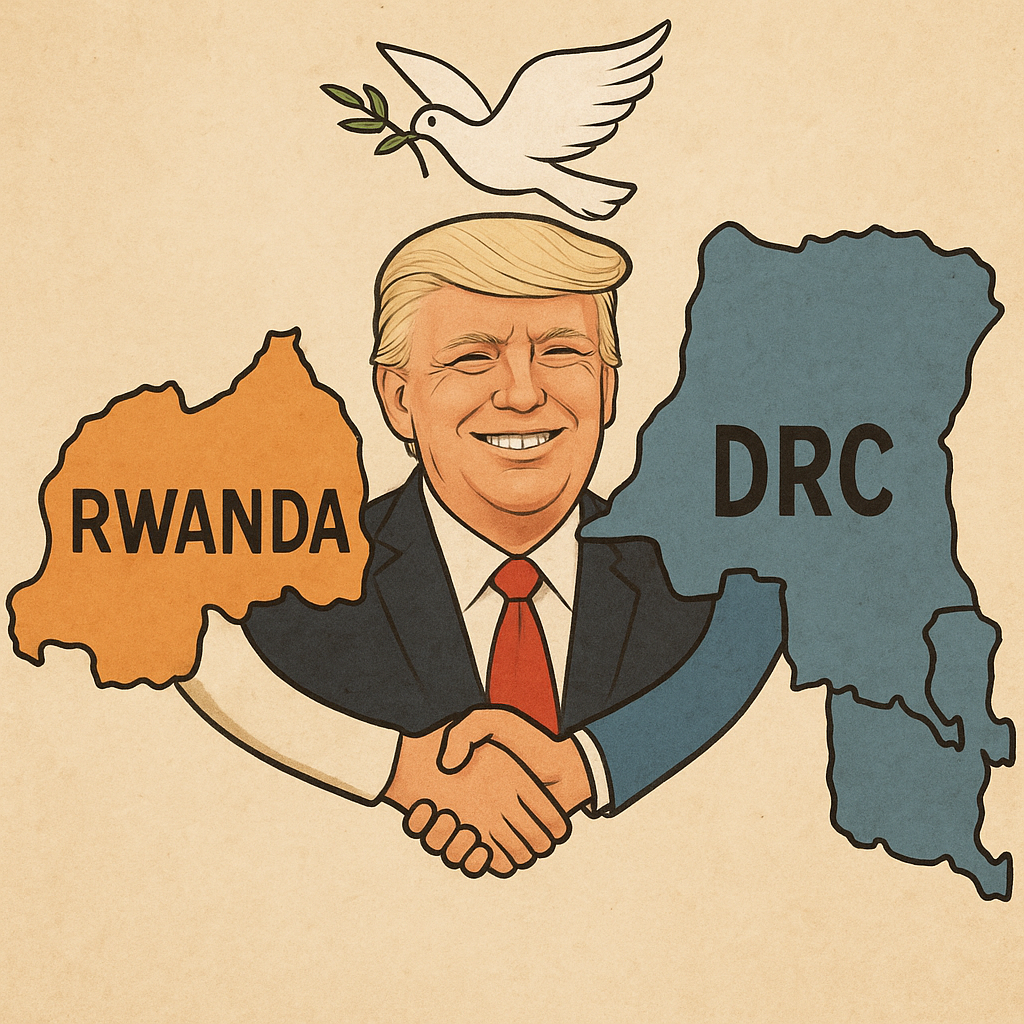
The Washington Accords for Peace and Prosperity between the Democratic Republic of the Congo (DRC) and Rwanda were formally signed in Washington, D.C. on December 4, 2025 under U.S. and Qatari facilitation. The accords reaffirm commitments on force disengagement, the ending of support to armed proxies, and an economic cooperation agenda meant to convert the region’s mineral wealth into shared development. The U.S. State Department’s brief announcing the signature is available here: https://www.state.gov/releases/office-of-the-spokesperson/2025/12/signing-of-the-washington-accords-for-peace-and-prosperity-between-the-democratic-republic-of-the-congo-and-rwanda . But the sobering reality is that renewed fighting in South Kivu—especially the latest M23/AFC push toward Uvira and the displacement of over 200,000 people since early December—has already exposed the gap between the ceremony of peace and the machinery of peace.
If the Great Lakes has taught the region anything, it is that agreements without a credible, well-resourced implementation engine become historical footnotes. The question, then, is not whether the Washington Accords are worth supporting—they are—but whether the region can rapidly design an enforcement‑lite, verification‑heavy pathway that breaks the cycle of proxy warfare, payroll leakage, and revolving‑door rebellions.
One decisive lever is disarmament, demobilization, and reintegration (DDR) combined with carefully structured military integration. This is not glamorous work. It is data‑heavy, politically sensitive, and logistically unforgiving. But it is the kind of work that can turn fragile diplomatic statements into day‑to‑day decreases in civilian harm. And it is precisely where Kenya can—and should—step forward to co‑lead.
Kenya’s comparative advantage is not theoretical. Nairobi led the East African Community Regional Force in eastern DRC in 2022–2023, gaining hard operational familiarity with terrain, actors, and the constant flux of local alliances. Kenya also hosted and drove the Nairobi Process, showing it can convene political and technical stakeholders without becoming a partisan spoiler. Coupled with a long record of U.N. stabilization deployments, this gives Kenya a credibility that is regional, not imposed.
This should not be mistaken for a call to militarize the peace. On the contrary, Kenya’s value lies in helping design a professional, time‑bound, individually based model that removes incentives for predation and re‑mobilization. Prior DDR efforts in the Congo faltered when whole blocs were integrated without serious vetting, when stipends and salaries were captured by ghost systems, and when monitoring teams lacked the political backing to call out violations. The result was predictable: fighters re‑appeared under new flags, armed communities were re‑taxed, and civilians paid the price.
The Washington Accords offer a fresh opportunity to break that logic. The core principle must be non‑negotiable: integration should be individual—not bloc-based—and anchored in credible external verification. Each combatant who seeks a uniform should be assessed with biometrics, service history, and clear eligibility filters for international humanitarian law and human-rights violations. Benefits should be traceable end‑to‑end, with payroll integrity tools that reduce leakage and corruption. This is how you make peace measurable.
A Kenya–European Union operational compact fits this moment. The EU can anchor the financing and technical rails—biometrics infrastructure, compliance auditing, and benefits‑tracking systems. Kenya can field mobile vetting and cantonment support teams and deliver mentor-led bridging training that prioritizes small‑unit cohesion and professional norms. The United States, through AFRICOM and related channels, can add specialist training lanes, limited logistics and verification enablers, and the political weight needed to keep the process honest.
What does this look like beyond policy papers? First, a small number of properly-resourced cantonment and screening hubs across North and South Kivu, with strong water, sanitation, medical, and psychosocial support. Second, an Individual Vetting and Tracking System that links weapons registration, eligibility checks, and stipend disbursements into one accountable chain. Third, an eight‑to‑ten‑week bridging program where mixed cohorts are trained under Kenyan mentorship and then integrated only at company level—no mass intakes, no political theatre.
The civilian reintegration track must be treated as an economic security intervention, not a charity add‑on. Community grants, apprenticeships, and targeted agricultural inputs can reduce the appeal of re‑mobilization. Quiet but firm mediation on housing, land, and property disputes should be built into the package; these disputes often become a hidden accelerant of violence once fighters return home.
Humanitarian corridors and returns routes deserve equal seriousness. Announcing safe passage is easy. Enforcing it is hard. Corridor compliance must be monitored with telemetry, common checkpoint protocols, and rapid incident reporting to joint security bodies. Kenya has the diplomatic habit and operational discipline to host these technical working groups in Nairobi and to produce monthly verification packs that donors and regional bodies can trust.
Sceptics will worry that Kenya’s involvement could add another external layer to an already crowded peace architecture. That risk is real. The answer is a narrow, measurable mandate: mobile vetting, mentorship, corridor monitoring, and transparent reporting into the joint mechanisms established under the accords. Kenya should not replace Congolese ownership; it should help make Congolese commitments verifiable and therefore fundable.
There is also a strategic economic dimension that cannot be ignored. The accords explicitly link peace to a regional economic integration framework. If the region is serious about shrinking the war economy, it must make “clean corridor” concepts tangible—using credible mineral traceability, pre‑export audits, and enforceable sanctions ladders. Done well, this can reduce the financial oxygen armed groups draw from illicit trade, while also creating a partial funding stream for reintegration support.
The hard truth is that the latest surge of violence in South Kivu is not a reason to abandon the Washington Accords; it is a reason to implement them faster and with better tools. Peace deals in the Great Lakes fail when they are treated as ceremonies. They edge toward success when the boring machinery of verification, payroll integrity, and individually accountable integration is funded early and defended politically.
Kenya has an opening to help the region seize this moment. A disciplined co‑lead role—explicitly partnered with the EU’s financing and technical controls and supported by U.S. training enablers—could make the difference between another well‑written accord and a credible turning point. The measure of success will not be the elegance of the document signed in Washington. It will be whether families in Goma, Bukavu, Uvira, and the rural corridors between them can finally plan a future that is not hostage to the next armed mobilisation.